The Weight of Water
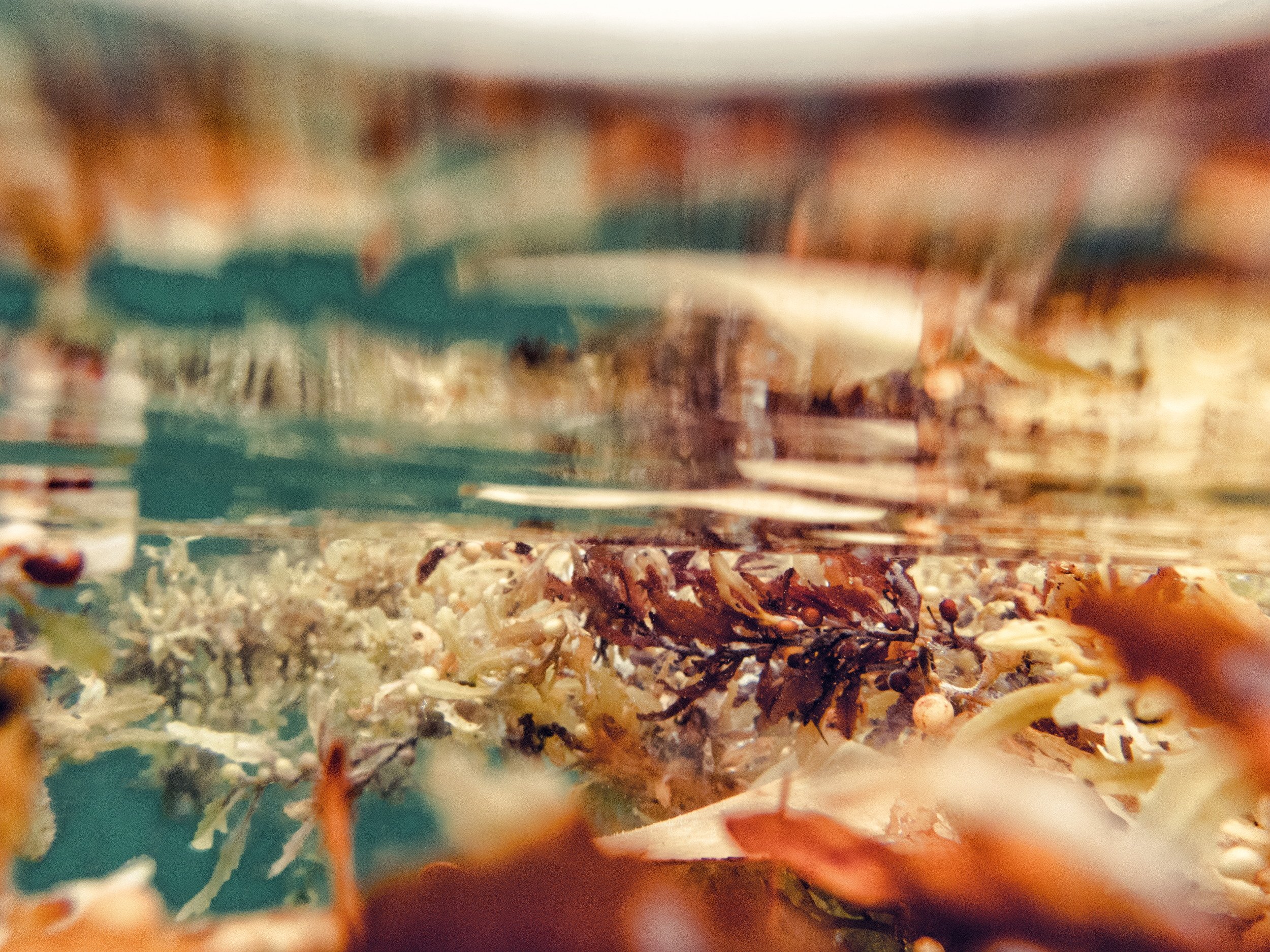
The Weight of Water is a decade‐long search, from locations in Trinidad to as far north as the Bahamas archipelago. It captures my abiding affinity for water, my thirst for spiritual growth and a deeper understanding of myself, these islands, and the world around me. Including images of where the river meets the sea, a place of great fertility and great frailty, the collection questions what it means to be multi-ethnic societies, where we often confront instead of coming together; and, too, our own warring feelings and desires. Why is an image of a dead bird also beautiful? Is it so we may salvage something from loss? Or are we as uncontained, as boundless, as unknowable as any sea? The use of weight is wide and metaphorical: from emotions being too heavy to bear, to the priceless commodity water has become, to the toll on our lives to have unpolluted water, to the dominion of nature with her hurricanes and disasters, to the diverse people―forced, misled, and full of hope and ambition―the water has brought us, to the murky depths of grief and sadness.
A body of work is like a body of water. Restless and ongoing, water’s continual course is to change form and location. The Weight of Water is my first solo exhibition since Trees Without Roots opened in 2006 at the Havana Biennial in Cuba. Trees Without Roots, later exhibited in Trinidad, Spain, Costa Rica, and in 2011’s Wrestling with the Image at Washington’s Art Museum of the Americas and The World Bank, documented the Afro‐Caribbean contribution to Central America, through the building of railroads, banana farming, and the construction of the Panama Canal.
The Weight of Water progresses my work on migration, alienation, mercantilism, slavery, and the spiritual practices brought to these islands by the transportation of people.
Both born and formed on an island, I question water’s importance in my life and in the region, first as a means of the earliest migration of the indigenous people of South America. Then the arrival of Columbus, the draining of our resources into colonial vessels bound for Europe, the cargoes of slaves and indentured labourers, and the wash of immigrants from all corners of the planet. The British, French, Chinese, and Portuguese, the Syrians and the Lebanese…all carried some part of their cultural heritage to contribute to the multiculturalism of these islands.
We are drawn to water by necessity, civilizations having thrived along rivers, the prevalence of port cities and towns. Water is the source of life; without it we will die. It accounts for up to 60% of our bodies and covers 71% of our planet. Even if we were not island people, we could not escape it. Water is also a returning, and returning to source. In feminine cosmology, before the beginning of all beginnings, there was the great primordial womb resting deeply and euphorically within the completeness of herself. Each of us emerges from our mother’s womb, her amniotic fluid a reminder that before humans walked the earth, other life had already begun in the water. Water then, connects us to all that was, is, and will be. It is continuation and commonality.
The Weight of Water addresses pollution and consumption, linking environmental and spiritual degradation. If we are ourselves water, to pollute is to be polluted; and to consume more than necessary is to drain our very core. Flood and famine show that water in either extreme is devastating: the substance that fills 73% of our brains and our hearts must be in balance. Water runs through our myriad spiritual beliefs, from cleansing and purity to the unquenchable thirst for enlightenment and knowledge. It is central to Christian baptism and Hindu cremation. The Yoruba slaves worshiped goddesses of the sea and river, Yemanja and Oshun; the indentured Indians, the goddesses Kali and Saraswati. The impending shortage of water, despite our seemingly endless oceans, seas and rivers, is troubling beyond mere mortality. If water can lose its fluid constancy, what then will become of us beyond our bodies?
Having not produced a solo show in nearly a decade, I wish to publish The Weight of Water catalogue as a record of the exhibition and a document to educate and to sensitize our population to the reality that water is an endangered commodity we must conserve at all costs. This catalogue will also be shared with international curators for possible inclusion in other group or solo shows.